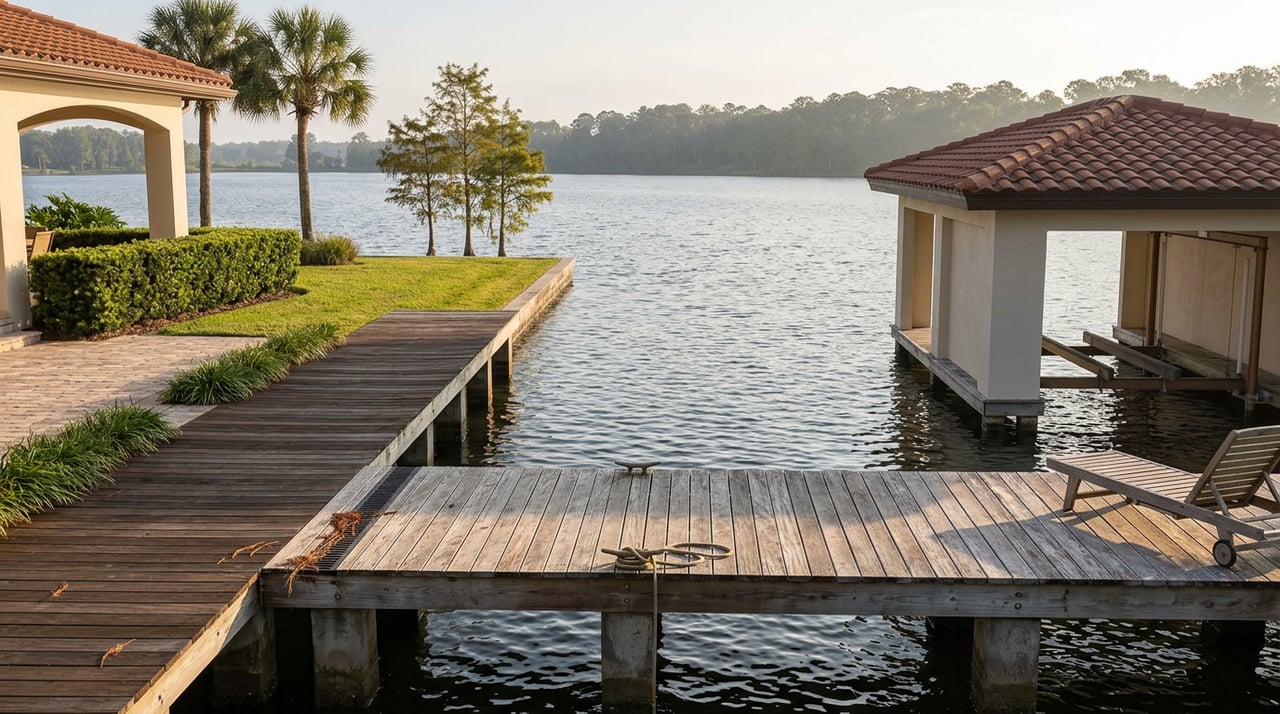
On Winter Park's Chain of Lakes, Closing on the House Isn't Closing on the Dock
September 17, 2026
September 17, 2026
Picture the scene most buyers have in their head when they go looking for lakefront on Winter Park's Chain of Lakes. The closing happens, the keys change hands, and by the following weekend there's a boat tied up behind the house, ready to slip through the Venetian Canal toward Lake Osceola or Lake Maitland. That picture is accurate for plenty of homes. It is not accurate for all of them, and the gap between the two is where buyers get surprised.
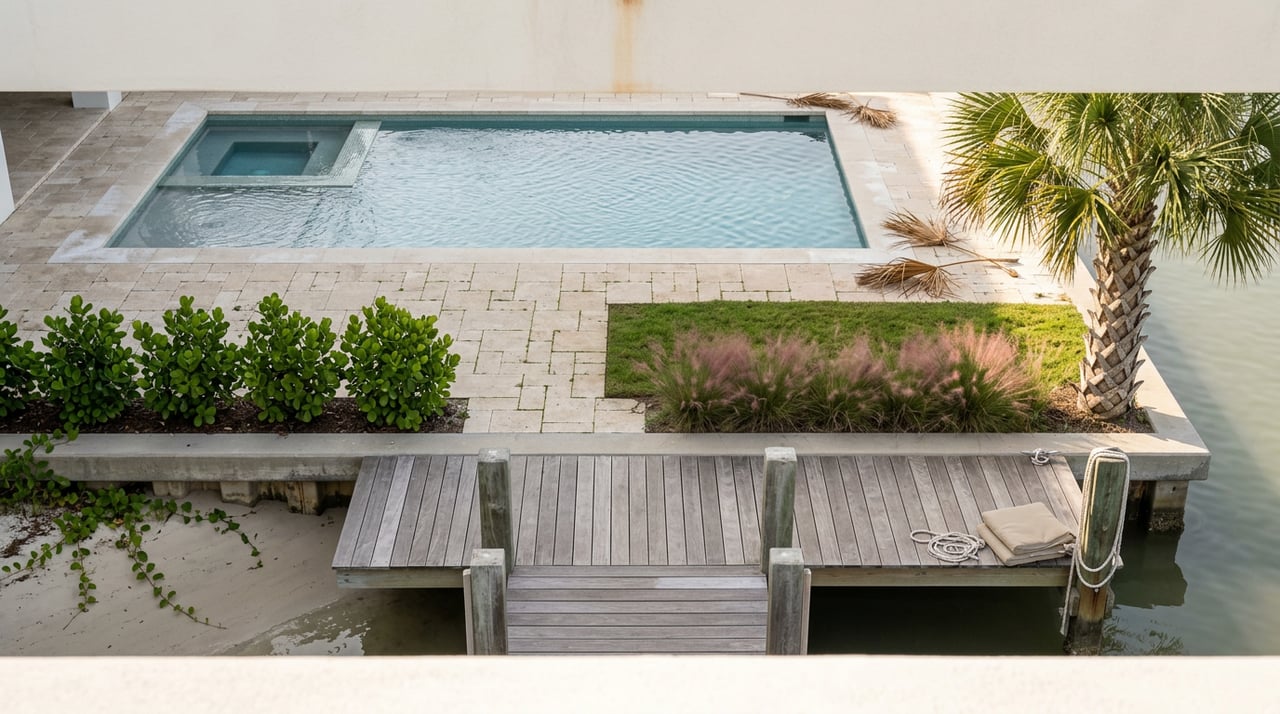
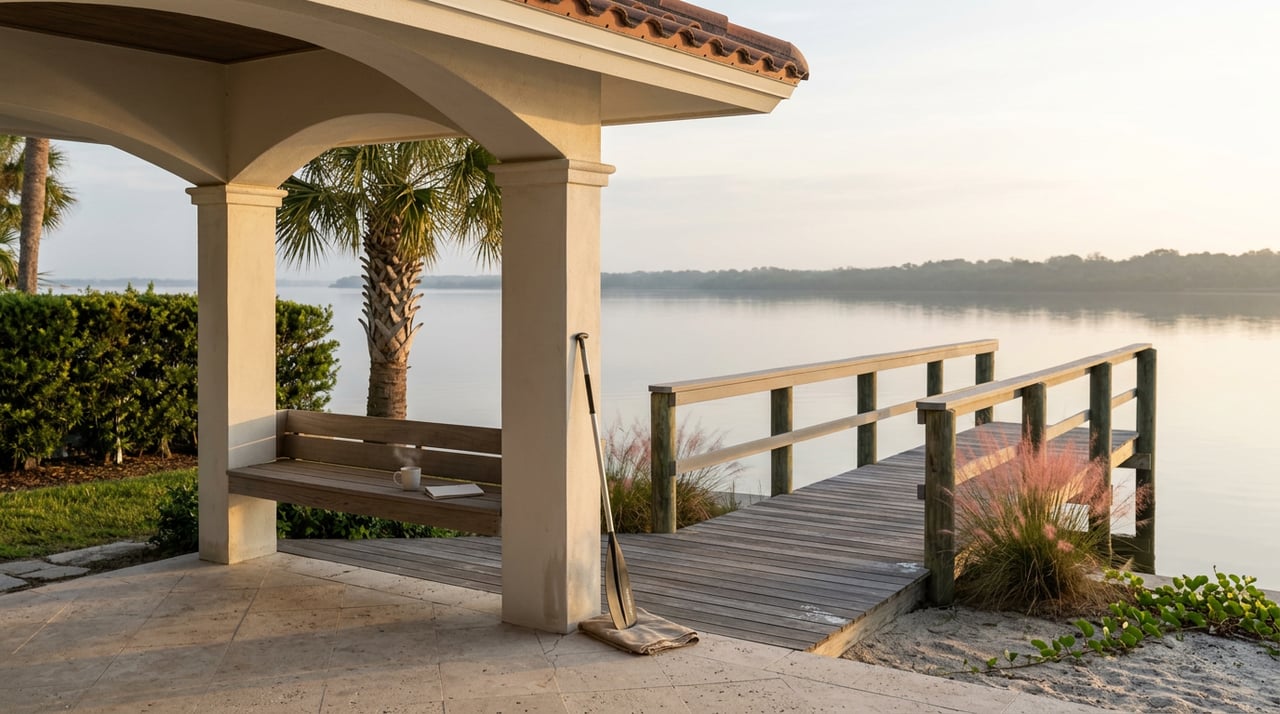
A dock or boathouse on the Chain isn't a fixture that transfers with the deed the way a pool or a lanai does. It's a use the City of Winter Park grants, structure by structure, through a public process that involves your neighbors, a city board, and in some cases the condition of your own shoreline. Understanding that process before you write an offer, not after you close, is what separates a smooth first season on the water from a longer one spent waiting on a hearing date.
Any new dock, boathouse, or gazebo on the Chain has to clear the city's Lakes & Waterways Advisory Board before a building permit is even issued. That review happens at a public hearing, and the code requires that adjacent waterfront owners be notified so they can weigh in, consenting or objecting to the plans in front of them. If your target lake happens to be Lake Killarney, the review shifts to a separate body entirely, the Lake Killarney Board, so the first practical question for any lakefront offer is which board actually has jurisdiction over your shoreline.
There's one meaningful exception. If you're replacing an existing dock or boathouse in the same footprint and it already meets current code, the board review is waived. That distinction matters enormously in due diligence: buying a home with a dock that only needs a like-for-like rebuild is a very different timeline than buying one where you're proposing something new, larger, or in a different spot.
The mechanics of the calendar are worth knowing too. Site plan applications are due by the second Tuesday of the month to be heard at the following month's meeting, which convenes at noon in the Ray Beary Community Room at the city's Public Safety Facility on North Virginia Avenue. Miss that submittal window and you're waiting for the meeting after next. For a buyer who assumed a dock could go in within a few weeks of closing, that calendar alone can reset expectations by a season.
Before the city will even consider a dock or boathouse permit, it checks the shoreline itself. Winter Park's code requires a natural vegetation buffer along the water, with a cleared access corridor limited to 50 feet or 50 percent of the shoreline width, whichever is less. If a previous owner cleared more than that, whether for a wider view or a bigger lawn, the property doesn't qualify for a shoreline permit until it's revegetated back into compliance.
This is the detail that turns "we'll add a dock after closing" into a multi-month project. Revegetation isn't a same-week fix. It has to establish before the city will sign off, and that clock runs independently of the board hearing schedule. A buyer evaluating two otherwise comparable canal-front homes should be asking a very specific question that has nothing to do with square footage: does this shoreline already meet the vegetation standard, or does it need to be brought into compliance first?
Even once you clear the board and the vegetation standard, the code caps how much structure you can build, and the cap depends on where you are on the Chain.
| Lot type | Maximum structure area | Other limits |
|---|---|---|
| Lake lots | 600 sq ft total (dock, boathouse, decks, stairs combined) | Boathouse height capped at 11 ft, roof pitch minimum 2:12 |
| Canal frontage, 75 ft or less | 450 sq ft | Max canal boathouse width: 20 ft |
| Canal frontage, 76 to 100 ft | 500 sq ft | Setback 10 ft from side lot line |
| Canal frontage, over 100 ft | 550 sq ft | Setback reducible to 5 ft with a signed letter of no objection from the neighbor |
Boathouses also can't include a bathroom or a kitchen. The code is explicit that these structures exist for boating and recreation, not as living space, and enclosed storage is capped at 80 square feet. If a listing photo shows a boathouse with a wet bar or a full bath, that's worth a direct question about whether it was ever legally permitted as built.
Some of the oldest boathouse lots on the Chain sit along the Venetian Canal, the passage connecting Lake Osceola and Lake Maitland, and they were originally platted as part of the historic Kronenberger subdivision. A handful of these lots carry a use restriction tied to ownership as of January 1, 1981: depending on who held title to a given lot on that date, it may be legally usable only by residents of the subdivision it was platted to serve, not by whoever buys it later. That's a title nuance, not a deal breaker, but it's exactly the kind of thing worth raising directly with your closing attorney before you assume a boathouse lot comes with unrestricted personal use.
None of this is academic on the Chain. Lakefront here trades from roughly the low millions on modest footprints up past eight figures for the most established addresses, and a home on Lake Maitland sold for $7.25 million, standing as the second most expensive sale in Winter Park's history. At those numbers, a buyer who assumes dock rights transfer automatically is making a meaningful assumption on a meaningful check. The zip code split matters here as well: 32789 is the core Chain and Park Avenue market, while 32792 sits toward Maitland and carries a different price profile, so confirming which board and which code section applies to your specific shoreline is part of the same diligence as confirming which zip code you're actually buying into.
For buyers who want water access without navigating any of this before deciding on a house, the Chain does have public entry points. Dinky Dock Park on Lake Virginia and Fort Maitland Park both offer free launches for canoes, kayaks, and paddleboards, and they're a reasonable way to get a feel for the lakes while your own permitting timeline plays out. It's also worth remembering that the Winter Park Scenic Boat Tour has been running through these same canals since the 1930s, which is part of why the code cares so much about sightlines and setbacks. Your dock isn't just sharing water with your neighbors. It's sharing a narrow canal with a tour route that predates almost every house on it.
Does every dock need board approval? No. If you're replacing an existing dock or boathouse in the same location and it already meets current code, the review is waived. New construction, expansions, or a first-time dock all require the full process.
How long should I budget for approval? Plan around the monthly cycle at minimum: applications are due the second Tuesday of the month for a hearing the following month. If the shoreline needs revegetation first, add the time it takes for plantings to establish before the city will consider a permit at all.
What if my home is on Lake Killarney? Confirm jurisdiction early. Lake Killarney has its own review board, separate from the citywide Lakes & Waterways Advisory Board that covers the rest of the Chain.
The Chain of Lakes remains one of the few places in Central Florida where a buyer can genuinely step from a private dock into a connected system of lakes and canals that has looked essentially the same for a century. Getting there with full use of that water just takes knowing, before you're under contract, exactly what the house comes with and what you'll need the city's permission to add.
If you're evaluating lakefront on the Chain and want a clear read on a specific shoreline's dock history, board jurisdiction, or vegetation standing before you make an offer, CC Luxury Group can walk the property with you and help you ask the right questions early. Schedule a Complimentary Luxury Consultation to start the conversation.
With over 20 years of knowledge, and $150 Million in real estate sold representing hundreds of transaction sides you can count on Crystal's experience. It is our goal as your full-service real estate consultants specializing in the Central Florida area, to provide you with superior service at all times.