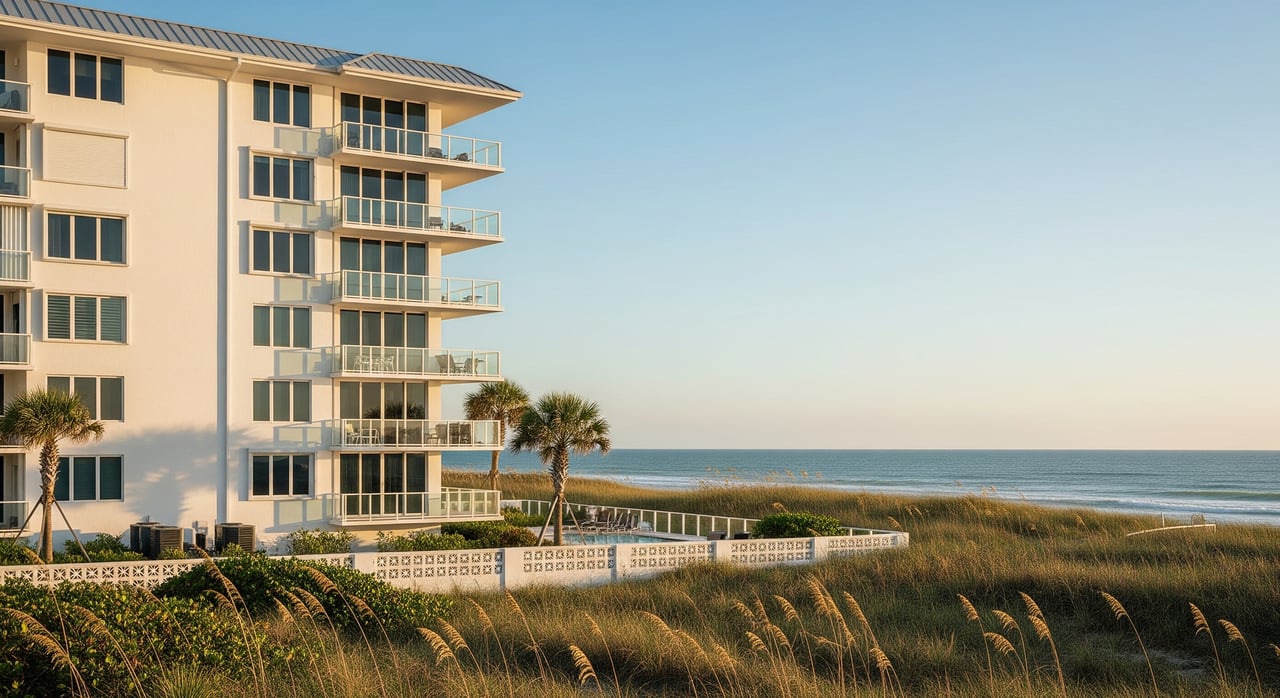
White beachfront condominium with glass balconies behind dune grass, palm trees, and a low patterned wall.

Condo Reserves and Milestone Inspections in Indialantic

December 4, 2025

Are you eyeing a beachside condo in Indialantic but worried about surprise repairs or rising fees? You are not alone. Florida’s updated rules around condo reserves and milestone inspections have changed how buyers should evaluate buildings, budgets, and long‑term costs. In this guide, you will learn what to request, how to read the documents, and how lenders look at these issues so you can make a confident offer. Let’s dive in.

Milestone inspections in Florida

Florida law requires a structural “milestone” inspection for many condominium buildings once they reach a certain age, then at regular intervals. If a building is three or more stories and in a coastal zone, it is often subject to these rules when it hits the age threshold. A licensed engineer or architect performs the inspection and reports on structural integrity, safety concerns, and recommended repairs.

The report is provided to the association and filed with the local building official within a set timeframe. Associations must make the report available to owners and prospective buyers. For you, this report can be one of the most important documents you read because it signals potential repairs, timelines, and potential special assessments.

In Indialantic, many buildings sit close to the Atlantic and are likely to fall under the statewide milestone framework once they meet the height and age criteria. Older coastal buildings, especially those built in the 1980s or earlier, may already have completed inspections and have repair plans underway.

Reserves: what they are and why they matter

Condominium associations in Florida prepare annual budgets that include operating expenses and contributions to reserves for capital projects and deferred maintenance. Reserves are earmarked funds set aside for big‑ticket items, such as roof replacement, exterior painting, concrete restoration, or elevator work. A healthy reserve balance reduces the risk of special assessments.

Associations often use a professional reserve study to estimate remaining useful life, projected costs, and recommended annual contributions. While details can vary by association, you should expect to see a list of components, timelines, and dollar estimates. If the current reserve balance and budgeted contributions fall short of the study’s recommendations, the gap can show up later as higher fees or special assessments.

What to review before you tour

Get key documents early so you can decide which buildings deserve a visit. Ask the listing agent or seller for:

  • Current year association budget and 2 to 3 prior years of budgets
  • Most recent reserve study and the current reserve account balance
  • Latest milestone inspection report and any follow‑up engineer proposals or repair plans
  • Board meeting minutes for the last 12 to 24 months
  • Special assessment history for the last 5 to 10 years, plus any planned or proposed assessments
  • Condominium declaration, bylaws, and rules, including how reserves and assessments are handled
  • Certificate of insurance and master policy summary, including hurricane or windstorm deductibles
  • Status of any litigation involving the association
  • Owner delinquency rate and assessment collection policy
  • Recent invoices or contracts for major exterior, structural, or building‑system work
  • Any correspondence with the local building department about inspections or compliance

Bringing these documents to your first tour shortens your decision cycle and helps you focus on the best‑run buildings.

How to read the documents

  • Reserves vs. study: Compare the reserve balance and budgeted contributions to the reserve study’s recommended funding level. A large gap is a red flag.
  • Milestone findings: Focus on items flagged as safety issues, repairs recommended within 1 to 3 years, and total estimated costs. Look for a realistic plan and timeline to fund and complete the work.
  • Insurance: Pay attention to hurricane and windstorm deductibles, often shown as a percentage of the insured value. After a storm, a large deductible can lead to owner assessments to cover the association’s share.
  • Minutes: Repeated deferral of maintenance, disputes with contractors, or talk of big repairs without a funding plan suggests governance issues.
  • Special assessments: Ask whether an owner vote is required, and whether the board can levy emergency assessments. Confirm in writing how any existing assessments will be handled at closing.

How lenders evaluate condos

Mortgage programs and lenders review the financial and physical health of a condo project, not just your personal finances. Many look at reserve funding, current or planned special assessments, the percentage of owner‑occupants, recent structural findings, and the building’s insurance.

  • Reserves: Consistent reserve funding and a solid reserve balance make approval easier. Thin reserves can raise questions about future assessments.
  • Special assessments: If there is a large assessment, lenders may require proof that you can cover your share, or that the association has a documented plan to fund repairs.
  • Milestone findings: Significant structural issues can delay or block financing until a repair plan is in place and funded.
  • Insurance: Lenders want to see adequate coverage. Large deductibles or coverage gaps raise risk and can require more documentation.

Lender standards vary. Some will work with buildings that have challenges if there is a clear plan and your finances can absorb it. Others will not. Start the condo project review early to avoid surprises.

Fees, assessments, and your real monthly number

Your monthly housing number for a condo should include more than principal and interest. Build a complete picture so you can compare buildings fairly.

Typical monthly condo fee components:

  • Operating and administration costs, such as management and common‑area utilities
  • Routine maintenance and repairs
  • Reserve contributions for long‑term projects
  • A portion of the association’s master insurance
  • Utilities or amenities, if included in dues

To estimate your real monthly cost, add mortgage principal and interest, property taxes, homeowner’s insurance for your unit, the condo fee, and any utilities that are not covered. Then add a contingency buffer for potential assessments. In older or coastal buildings, plan for an annual buffer that reflects the building’s age, reserve gap, and milestone findings. Your buffer can be several hundred to several thousand dollars per year depending on the building and upcoming projects.

How special assessments work at closing

Associations levy special assessments when reserves are not enough to cover major work. Details are governed by the condo documents and state law. In many sales, any unpaid assessment is resolved at closing, often by the seller, and associations can record liens if owners do not pay. Planned future assessments that have not yet been levied are different, and they can still affect your long‑term affordability. Get written confirmation about any current assessments and how they will be handled.

Indialantic local context

Indialantic’s barrier‑island location on the Atlantic brings sun, surf, and salt air, along with extra exposure to storms and corrosion. Many mid‑ and high‑rise buildings near the ocean are subject to milestone inspections once they meet the age and height thresholds. Buildings from the 1980s or earlier are often at or past the initial inspection cycle and may already have repair plans and budgets in place.

Coastal exposure can also influence the association’s master insurance cost and the hurricane deductible structure. If the deductible is large relative to the insured value, a post‑storm assessment could be material. This is why careful review of the insurance certificate is essential.

Your step‑by‑step plan

  1. Before touring
  • Ask for the current budget, latest reserve study, most recent milestone inspection report, last 12 months of board minutes, and the certificate of insurance.
  • Scan for reserve gaps, planned assessments, and any structural repair timeline.
  1. At the showing
  • Ask whether any special assessments are pending or recently approved.
  • Ask whether the milestone inspection identified structural issues and how the association plans to fund repairs.
  1. During diligence after an accepted offer
  • Request contractor bids tied to any required repairs, current reserve bank statements, recent financials, and a delinquency report.
  • Review the association’s declaration and bylaws to understand voting thresholds and assessment procedures.
  1. Coordinate with your lender
  • Start the condo project review right away. Share budgets, reserve studies, and the milestone report.
  • Confirm whether reserves, assessments, or occupancy levels affect loan approval for your selected program.
  1. Inspect the unit and the building
  • Order a private unit inspection and read the association’s engineer or architect reports for building‑wide issues that could affect your unit.

Red flags to investigate

  • A milestone inspection report that cites immediate or urgent structural safety items
  • A large special assessment without a clear timeline or funding plan
  • A master insurance policy with a very large hurricane deductible or an insurer with weak financial strength
  • Repeated deferral of maintenance noted in minutes or reserve studies
  • High owner delinquency or active litigation that could lead to assessments

Who to ask and how to communicate

  • Association manager: Request budgets, reserve studies, bank statements for reserve accounts, insurance certificates, minute summaries, and pending repair bids.
  • Local building official: Confirm whether milestone inspection reports have been filed and whether there are outstanding compliance items.
  • Lender: Ask for a condo project review early and clarify any documentation needed for reserves, assessments, or insurance.
  • Independent engineer: If the milestone report shows major work, consider an outside structural engineer’s opinion on scope, timing, and potential cost allocation.

Move forward with confidence

When you focus on reserves, milestone findings, and a concrete funding plan, you reduce risk and protect your investment. By requesting documents early, coordinating with your lender, and leaning on local expertise, you can spot issues before they affect your budget or timeline. If the building is well managed, insured, and funded, you will feel the difference in both quality of life and long‑term costs.

If you want a calm, thorough partner who knows Indialantic’s coastal condo landscape, schedule time with Crystal Canina. We will help you request the right documents, interpret the findings, and position your offer with confidence.

FAQs

What is a Florida condo milestone inspection?

  • It is a structural evaluation by a licensed engineer or architect that reviews a condominium building’s integrity, identifies safety issues, and recommends repairs on a set schedule tied to building age.

Do Indialantic ocean‑area condos have to complete milestone inspections?

  • Many three‑story or taller coastal buildings fall under the statewide milestone framework once they reach the age threshold, and local officials handle filing and compliance.

Which condo documents should I request before making an offer?

  • Ask for the budget, reserve study and balance, milestone report, board minutes, special‑assessment history, insurance certificate, litigation status, delinquency data, and recent major repair invoices.

How do reserves and assessments affect mortgage approval?

  • Lenders and programs review reserve funding and any assessments, along with recent structural findings and insurance, and may require a plan or proof of your ability to cover costs.

What should I know about hurricane deductibles on the master policy?

  • Deductibles are often a percentage of insured value; large deductibles can translate into owner assessments after a storm, so review them closely.

Who pays a special assessment at closing in Florida?

  • Unpaid assessments are often resolved by the seller at closing, but it depends on the association and contract; get written confirmation of how any assessment will be handled.

Work With Crystal

With over 20 years of knowledge, and $150 Million in real estate sold representing hundreds of transaction sides you can count on Crystal's experience. It is our goal as your full-service real estate consultants specializing in the Central Florida area, to provide you with superior service at all times.